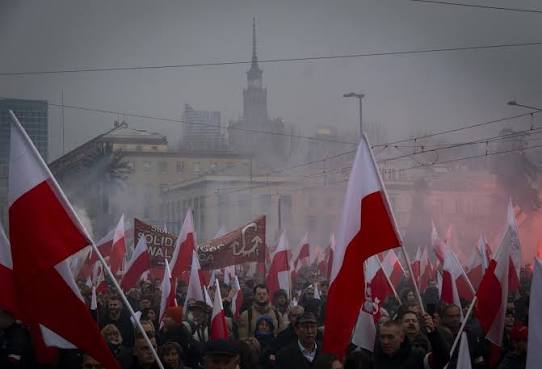
Poland: The End of an Era Looms


Warsaw, Poland — Poland is entering a period of significant political and social transition, with many observers describing the moment as the possible end of an era that has shaped the nation for more than a decade. As new political realities emerge and public expectations evolve, the country stands at a crossroads that could redefine its future both domestically and within Europe.
For years, Poland has been one of the most influential nations in Central and Eastern Europe, experiencing steady economic growth, increasing international influence, and intense political debates over the direction of its democracy. The policies and leadership that dominated the national conversation have left a lasting mark on the country’s institutions, economy, and identity. However, recent developments suggest that a new chapter may be about to begin.
Political analysts point to shifting voter priorities as a major factor behind the changing landscape. Younger generations are increasingly focused on issues such as housing affordability, climate policy, technological innovation, and closer cooperation with European partners. At the same time, older concerns regarding national sovereignty, security, and cultural identity remain powerful forces in public life. The challenge for Poland’s leaders will be balancing these competing expectations while maintaining stability.
Economic conditions have also played a role in shaping the national mood. Although Poland has been one of Europe’s strongest-performing economies in recent decades, rising living costs and global economic uncertainty have affected households across the country. Many citizens are calling for reforms aimed at improving public services, supporting businesses, and ensuring long-term economic competitiveness.
Internationally, Poland continues to occupy a strategic position within both the European Union and NATO. Its role in regional security has grown considerably in recent years, particularly in response to ongoing geopolitical tensions in Eastern Europe. As a result, decisions made in Warsaw are being watched closely by allies and partners across the continent.
Despite differing views on what the future should look like, there is broad agreement that Poland is entering a transformative period. The institutions, alliances, and policies that defined recent years are facing new tests, while emerging leaders and movements seek to shape the next stage of the country’s development.
Some experts caution against describing the moment as a dramatic break with the past. Instead, they argue that Poland’s evolution reflects the natural progression of a mature democracy adapting to changing circumstances. Others believe the coming years could produce profound shifts in governance, social priorities, and Poland’s role on the world stage.
Whatever the outcome, one thing is clear: a sense of transition is in the air. For many Poles, the question is no longer whether change is coming, but how far-reaching that change will be. As the nation looks ahead, the end of one era may simultaneously mark the beginning of another—one that will shape Poland’s future for gene
rations to come.