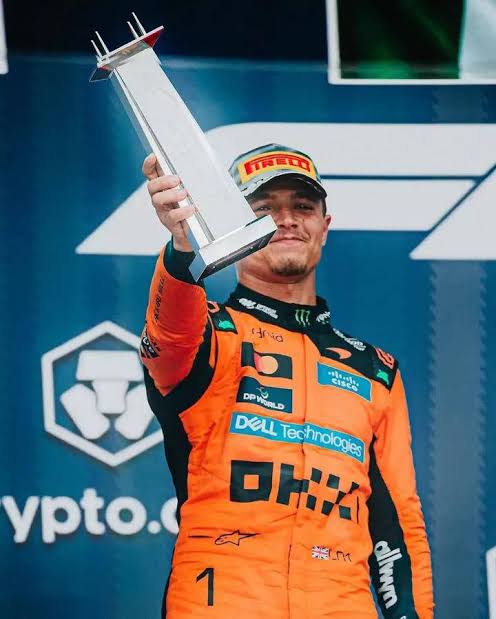
Breaking news: A mixed bag, really. We just got undercut. No excuses other than that. We got undercut; we should have boxed first. Kimi did a good job, hats off to Merc and kimyi – they drove a good race.
We Got Undercut”: Strategy Regret and Rising Talent Define a Dramatic Race Day
In the fast-paced, high-stakes world of Formula 1, races are often decided not just by speed, but by strategy. That reality was on full display in the latest Grand Prix, where a candid post-race admission—“a mixed bag, really… we got undercut”—captured the frustration of a team that felt victory slipped through its fingers.
The phrase “undercut” has become one of the most critical tactical elements in modern Formula 1. It refers to a strategy where a driver pits earlier than a rival, gains an advantage on fresh tyres, and emerges ahead once the competitor makes their stop. In this case, that precise move proved decisive, catching one team off guard and reshaping the race outcome.
A Costly Strategic Misstep
The admission that “we should have boxed first” highlights a moment of hesitation that ultimately proved costly. In Formula 1, decisions are made in fractions of seconds, often under immense pressure. Teams rely on real-time data, predictive models, and instinct to determine the optimal moment to pit. Yet even with advanced technology, there is always an element of uncertainty.
By delaying their pit stop, the team left themselves vulnerable to the undercut—a move their rivals executed to perfection. Once the advantage was lost, recovering track position became an uphill battle. On circuits where overtaking is difficult, track position is everything, and losing it can mean the difference between victory and disappointment.
The driver’s honest reflection—acknowledging the lack of excuses—speaks to the accountability that defines elite motorsport. Rather than blaming external factors, the focus was squarely on strategy, an area where even the best teams can falter.Kimi Antonelli’s Breakthrough Moment
Central to the race narrative was the performance of Kimi Antonelli, whose impressive drive played a key role in capitalizing on the strategic opportunity. The young Italian continues to build a reputation as one of the most exciting prospects in the sport, and this race further cemented his growing status.
Antonelli’s execution was flawless. Not only did he benefit from the undercut, but he also demonstrated composure and consistency in maintaining his position under pressure. Managing tyre wear, defending against challengers, and delivering competitive lap times are all essential skills—and Antonelli showcased them with maturity beyond his years.
The praise directed at him—“Kimi did a good job”—reflects the respect he is earning within the paddock. In Formula 1, recognition from rivals is not given lightly. It is a testament to his ability that even those who were on the losing end of the strategy acknowledged his performance.
Mercedes Gets It Right
Credit also goes to Mercedes-AMG Petronas Formula One Team, whose strategic call proved decisive. In a sport where split-second decisions can define outcomes, Mercedes executed their plan with precision.
The timing of the pit stop, the efficiency of the crew, and the driver’s ability to extract maximum performance from fresh tyres all combined to create the perfect undercut scenario. It was a textbook example of how strategy and execution must align to achieve success.
For Mercedes, this result reinforces their reputation as one of the most tactically astute teams in Formula 1. Even in seasons where outright pace may fluctuate, their ability to outthink rivals often keeps them competing The Importance of Split-Second Decisions
This race serves as a reminder of how fine the margins are in Formula 1. A delay of even a single lap can open the door for rivals to seize the initiative. Teams must constantly weigh risk against reward: pit too early, and you risk tyre degradation later; pit too late, and you risk being undercut.
The losing team’s acknowledgment of their mistake highlights the importance of decisiveness. In hindsight, the correct call seems obvious, but in the moment, it is anything but. Engineers and strategists must interpret vast amounts of data while anticipating the moves of competitors—a task that is as complex as it is demanding.
A “Mixed Bag” Performance
Describing the race as “a mixed bag” suggests that, despite the strategic setback, there were positives to take away. Perhaps the car showed strong pace, or the driver delivered a solid performance in other aspects of the race. In Formula 1, progress is rarely linear, and teams often find themselves balancing successes and setbacks within the same weekend.
Such performances can still provide valuable insights. Data gathered from the race can inform future strategy, helping teams refine their decision-making processes. Lessons learned in defeat often prove crucial in achieving future victories.
The Rise of a New Generation
The spotlight on Kimi Antonelli also reflects a broader trend in Formula 1: the emergence of a new generation of drivers challenging established names. Young talents are entering the sport with advanced preparation, having developed their skills through rigorous junior programs and simulator work.
Antonelli’s success in this race is part of a larger narrative, one in which rising stars are reshaping the competitive landscape. Their fearlessness, adaptability, and technical understanding make them formidable opponents, even for seasoned veterans.
As the season progresses, the lessons from this race will undoubtedly influence future strategies. Teams will analyze what went wrong, refine their approaches, and aim to avoid similar mistakes. At the same time, competitors like Mercedes and drivers like Antonelli will look to build on their success, maintaining momentum in an increasingly competitive field.
For fans, races like this are a reminder of what makes Formula 1 so compelling. It is not just about speed, but about strategy, decision-making, and the human element that underpins every aspect of the sport

The admission “we got undercut” encapsulates the essence of Formula 1—a sport where even the smallest miscalculation can have significant consequences. While the result may have been a disappointment for one team, it also highlighted the brilliance of others, particularly Kimi Antonelli and Mercedes-AMG Petronas Formula One Team.
In the end, it was a race defined by strategy, execution, and emerging talent. A mixed bag, perhaps—but also a vivid illustration of why Formula 1 continues to captivate audiences around the world.