Headline: Leiden Declaration Warns That Artificial Intelligence Is Challenging the Fundamental Values of Mathematics
The global mathematics community is raising serious concerns over the growing influence of artificial intelligence in the field, following the release of the Leiden Declaration — a statement that warns A.I. could challenge the very foundation and core values of mathematics if left unchecked.
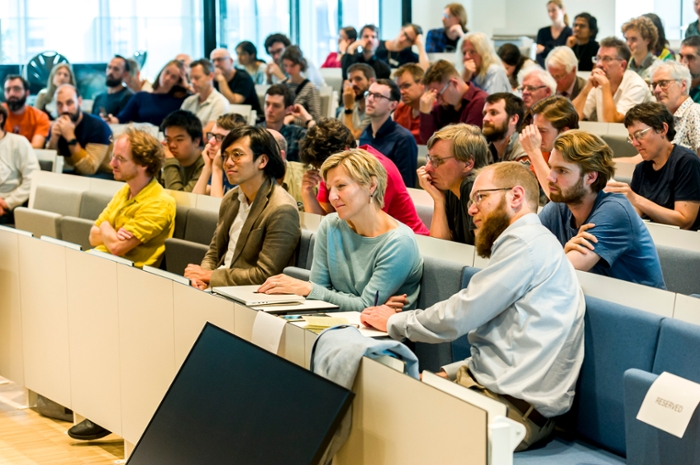
The declaration, unveiled during a gathering of leading mathematicians, researchers, and educators in Leiden, Netherlands, highlights both the promise and the risks of rapidly advancing artificial intelligence technologies. While A.I. has already shown remarkable abilities in solving equations, analyzing patterns, and assisting with complex proofs, experts say the technology could also undermine critical aspects of mathematical thinking, creativity, and academic integrity.
According to the declaration, mathematics has always been built on transparency, logical reasoning, and human understanding. However, modern A.I. systems are increasingly capable of producing solutions without clearly explaining how they arrived at their conclusions. This “black box” style of computation has sparked fears that future generations may rely too heavily on machine-generated answers instead of developing deep mathematical reasoning skills themselves.
The Leiden Declaration emphasizes that mathematics is more than just obtaining the correct answer. It is also about understanding the process, developing critical thinking, and encouraging intellectual curiosity. Researchers argue that if students and professionals become overly dependent on artificial intelligence tools, the discipline could lose the human creativity and rigorous proof-based tradition that has guided mathematics for centuries.
Despite the concerns, the declaration does not reject artificial intelligence entirely. Instead, it calls for responsible and ethical use of A.I. within mathematics education and research. Experts believe that A.I. can still serve as a powerful assistant for discovering patterns, speeding up calculations, and supporting innovation, provided that human oversight remains central.
Educational institutions are being urged to redesign teaching methods to ensure students continue learning problem-solving skills independently. The declaration also recommends stronger guidelines for transparency in A.I.-generated mathematical research, including clearer explanations of how algorithms reach conclusions.
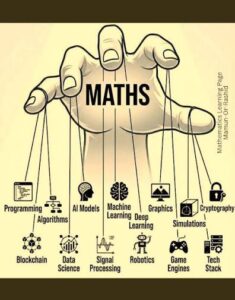
The issue comes at a time when artificial intelligence is rapidly transforming industries worldwide, including science, medicine, finance, and engineering. In mathematics, A.I. systems are already assisting researchers with theorem proving and advanced computational tasks that once required years of manual work.
However, many scholars fear society could enter an era where mathematical knowledge is trusted simply because a machine produced it, rather than because it has been fully understood and verified by humans. The Leiden Declaration warns that this shift could weaken confidence in mathematical truth and academic standards over time.
As debates around artificial intelligence continue to intensify globally, the Leiden Declaration is expected to become a major reference point in discussions about the future of mathematics and education. For now, mathematicians around the world appear united on one message: artificial intelligence should support human thinking
 — not replace it.