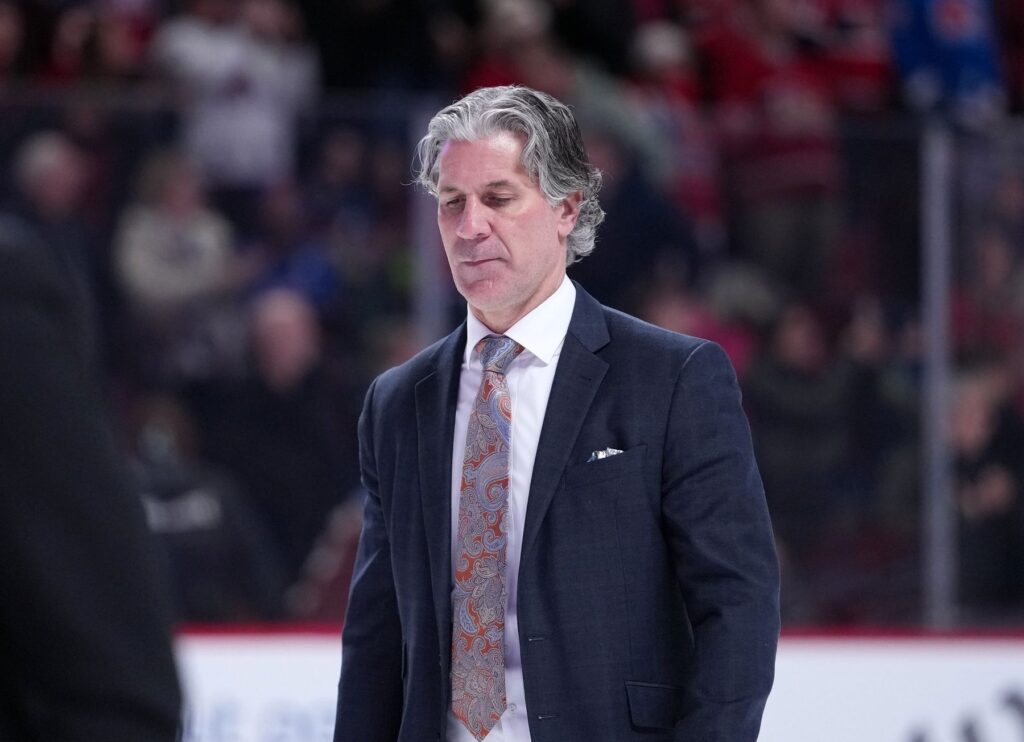
Breaking News: Jared Bednar Not Surprised as Game 2 “Settled Down After a Bit of Hectic Start”
Colorado Avalanche head coach Jared Bednar has shared his measured reaction following Game 2 of their playoff series, stating he was not surprised that the contest “settled down after a bit of hectic start.” The comments, made after a tightly contested and emotionally charged opening period, reflect Bednar’s calm understanding of playoff hockey dynamics and his team’s ability to adapt under pressure.
The Avalanche, who are currently deep into a postseason run, have once again demonstrated their trademark combination of structure, speed, and resilience. While the early moments of Game 2 were chaotic and physically intense, Bednar emphasized that such patterns are typical in playoff hockey and that his team responded exactly as expected.
The remarks were made during a post-game media availability covered by journalist Will Petersen on May 6, 2026, at 10:15 AM. Bednar’s tone remained composed, reinforcing his belief that playoff games often follow predictable emotional arcs before settling into structured competition.
A Hectic Start Typical of Playoff Intensity
Game 2 began with high energy from both sides, featuring fast transitions, heavy physical contact, and early scoring chances that reflected the urgency of postseason hockey. Neither team was willing to concede space easily, resulting in a frenetic opening period filled with turnovers, quick rushes, and aggressive forechecking.
According to Bednar, this type of start is not unusual in playoff series, especially when teams are adjusting to each other’s systems and attempting to establish early momentum. He noted that both sides came out with intensity, which contributed to the early chaos but also set the tone for a highly competitive matchup.
As the game progressed beyond the opening minutes, however, the pace naturally stabilized. Players began to settle into their roles, defensive structures tightened, and both teams focused more on controlled puck management rather than risk-heavy plays.
Bednar explained that this shift is exactly what he expects from experienced playoff teams, particularly ones that understand how to manage emotions and energy over the course of a full game.
Avalanche’s Composure Becomes a Key Factor
One of the most notable aspects of Game 2 was how quickly the Avalanche regained composure after the chaotic start. While early exchanges were unpredictable, Colorado gradually imposed its structure and began controlling possession more effectively.
Bednar praised his team’s ability to remain calm under pressure, highlighting their experience and tactical discipline as key reasons they were able to stabilize the game. Instead of being drawn into reckless exchanges, the Avalanche focused on puck support, clean zone exits, and disciplined defensive positioning.
This ability to “settle into the game” has become a hallmark of Bednar’s coaching philosophy. Under his leadership, the Avalanche have developed a reputation for adapting quickly to game flow changes, whether that means absorbing pressure or increasing offensive tempo when opportunities arise.
Understanding Playoff Momentum Shifts
Bednar’s comments also reflect a broader understanding of how playoff momentum works. In high-stakes hockey, games rarely maintain a single rhythm from start to finish. Instead, they move through phases of chaos, control, and counter-adjustment.
The “hectic start” described in Game 2 is often the result of adrenaline, early nerves, and strategic attempts to seize control. Once teams settle, systems take over, and the game becomes more structured.
For experienced teams like the Avalanche, recognizing and adapting to these shifts is crucial. Bednar’s ability to anticipate this pattern allows his team to avoid overreacting to early-game volatility.
Avalanche Depth and Structure Continue to Stand Out
While Game 2 featured early unpredictability, Colorado’s overall structure remained intact throughout. Their depth across all four lines once again played a significant role in maintaining stability after the opening minutes.
The Avalanche have built a roster capable of sustaining pressure regardless of which line is on the ice. This allows them to absorb chaotic stretches without losing overall control of the game.
Defensively, their ability to reset quickly after turnovers and maintain positioning under pressure has been equally important. Even during hectic sequences, Colorado’s system ensures that defensive responsibilities are clearly defined, reducing breakdowns.
Bednar has repeatedly emphasized the importance of structure in playoff hockey, and Game 2 served as another example of that philosophy in action.
Coaching Calmness Reflects Team Identity
Jared Bednar’s post-game reaction also reflects the identity of the Avalanche as a whole. Calm, analytical, and focused, he has consistently avoided emotional extremes in media discussions, even after intense playoff moments.
His approach contrasts with the emotional volatility often seen in postseason hockey, where coaches and players can react strongly to momentum swings or controversial calls. Instead, Bednar tends to frame games within long-term patterns rather than isolated moments.
By stating he was “not surprised” by how the game settled, Bednar reinforced the idea that the Avalanche are prepared for all phases of playoff competition, not just highlight moments or dramatic shifts.
This level of composure often translates directly to the ice, where players respond to coaching stability with disciplined execution.
Player Execution After Early Chaos
From a player perspective, Game 2 highlighted the importance of adapting quickly after a chaotic start. Once the initial pace stabilized, Avalanche players focused on cleaner puck movement, smarter positioning, and more controlled offensive setups.
Veteran leadership within the locker room also played a role in guiding younger players through the early intensity. Communication on the ice helped ensure that the team remained organized even during fast-paced exchanges.
The ability to reset mentally after a hectic opening is often what separates successful playoff teams from those that struggle under pressure. Colorado’s response in Game 2 reinforced their reputation as one of the league’s most mentally resilient squads.
Opponent Pressure and Early Game Strategy
While Bednar focused on his team’s response, the opponent’s strategy in the early stages of Game 2 also contributed to the chaotic start. Aggressive forechecking, quick transitions, and physical pressure were clearly designed to disrupt Colorado’s rhythm early.
This approach is common in playoff hockey, where teams often try to establish emotional and physical dominance in the opening minutes. However, sustaining that level of intensity for a full game is difficult, especially against structured teams like the Avalanche.
As the game progressed, the initial pressure naturally faded, allowing Colorado to regain control and dictate play more effectively.
Looking Ahead in the Series
As the playoff series continues, Game 2 will likely be viewed as an example of how momentum can shift within a single game. The Avalanche’s ability to absorb early chaos and transition into structured play gives them a strategic advantage moving forward.
Bednar’s calm assessment suggests that Colorado is not overly concerned with early-game volatility, as long as they can maintain control over the longer stretches of play.
Future games will likely feature similar patterns, with early intensity followed by tactical adjustments. The key for Colorado will be continuing to impose structure quickly, limiting opponents’ ability to capitalize on chaotic moments.
Conclusion
Jared Bednar’s reaction to Game 2 underscores the Colorado Avalanche’s maturity and playoff readiness. By stating he was “not surprised” that the game settled after a hectic start, he highlighted both his understanding of playoff hockey and his team’s ability to adapt under pressure.
The Avalanche’s calm response, strong structure, and depth continue to define their postseason identity. While early-game chaos is inevitable in playoff competition, Colorado’s ability to regain control remains one of their greatest strengths.
As the series progresses, that composure may prove just as important as any goal or highlight moment in their pursuit of playoff success.