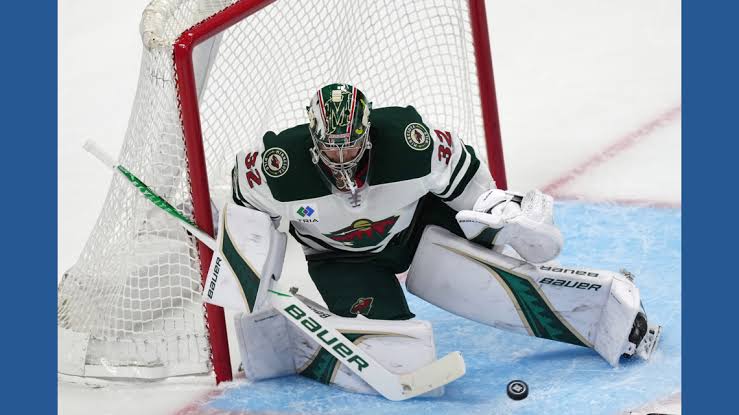
Breaking News: Avalanche Depth Turns Into 14-Goal Statement as They Take 2–0 Lead Over Wild in Second-Round Series
The Colorado Avalanche have sent a powerful message to the rest of the league after producing a dominant offensive display that has left the Minnesota Wild searching for answers. With a combined 14 goals across the first two games of their second-round playoff series, the Avalanche have surged into a commanding 2–0 lead and firmly established themselves as the team to beat.
What was expected to be a tightly contested postseason battle has quickly turned into a showcase of depth, speed, and clinical finishing from Colorado, as they overwhelmed the Wild in back-to-back games that highlighted the gap in offensive execution and roster balance between the two sides.
Avalanche Deliver Offensive Explosion in Game 1 and Game 2
From the opening puck drop of the series, the Avalanche made their intentions clear. Their pace, puck movement, and relentless pressure immediately put Minnesota on the back foot, forcing the Wild into defensive mode for long stretches.
In Game 1, Colorado set the tone early with aggressive forechecking and quick transitions through the neutral zone. Their top lines delivered as expected, but it was the secondary scoring that truly stood out. Multiple lines contributed goals, showcasing the depth that has become a defining feature of this Avalanche roster.
Game 2 only reinforced that message. Rather than slowing down, Colorado increased their intensity, exploiting defensive gaps and capitalizing on nearly every high-quality chance they created. The result was another high-scoring performance that pushed their series total to 14 goals in just two games.
The Avalanche’s ability to score in waves has left Minnesota struggling to find defensive stability. Whether facing the top line or depth units, the Wild have been unable to contain Colorado’s sustained attack.
Depth Becomes the Defining Factor
One of the biggest talking points of the series so far has been Colorado’s depth scoring. While star players are expected to produce in playoff hockey, championship teams are often defined by contributions from across all four lines—and the Avalanche have delivered exactly that.
Lower-line forwards have stepped up with timely goals, while defensemen have contributed offensively from the blue line. This balanced attack has made it extremely difficult for Minnesota to focus their defensive attention on any one group.
The Avalanche’s ability to rotate fresh legs without losing offensive pressure has also been a key factor. Their speed remains consistent throughout all periods, allowing them to wear down the Wild’s defensive structure over time.
In contrast, Minnesota has struggled to generate consistent offense and has spent large portions of both games defending in their own zone.
Minnesota Wild Facing an Uphill Battle
For the Minnesota Wild, the series has quickly turned into a difficult challenge. Entering the second round, expectations were high that they could compete physically and defensively against Colorado. However, the Avalanche’s offensive firepower has exposed weaknesses that the Wild have yet to solve.
Defensive breakdowns, missed coverage assignments, and difficulty exiting the zone under pressure have all contributed to Minnesota’s struggles. The Wild have shown moments of resilience, but they have been unable to sustain momentum long enough to shift control of the series.
Offensively, Minnesota has also been limited in creating high-danger chances. Colorado’s defensive structure and goaltending have ensured that even when the Wild generate opportunities, they are often forced into low-percentage shots.
The result is a series where Minnesota is constantly chasing the game rather than dictating it.
Avalanche Star Power and System Working in Sync
While depth scoring has been a headline, Colorado’s star players have also played their part in the dominant start to the series. The Avalanche’s top line continues to produce at an elite level, combining speed, creativity, and finishing ability that few teams can match.
However, what separates this Avalanche team from previous versions is the seamless integration between star talent and supporting players. The system allows every line to attack with confidence, and the defensive structure enables quick transitions that fuel their offensive pressure.
Colorado’s puck movement has been especially effective. Their ability to stretch the ice, create odd-man rushes, and exploit turnovers has consistently put Minnesota defenders in difficult positions.
The Avalanche are not relying on individual brilliance alone—they are executing a complete team system that maximizes every player’s strengths.
Goaltending and Defensive Structure Support the Attack
While the 14-goal total has dominated headlines, Colorado’s defensive play should not be overlooked. Their structure has limited Minnesota’s ability to build sustained pressure, and their goaltending has provided stability when needed.
By controlling zone exits and neutralizing Minnesota’s forecheck, the Avalanche have been able to dictate tempo throughout the series. This control has allowed their offense to play freely, knowing that defensive breakdowns are being minimized.
The balance between attack and defense has been a key reason for their success. Colorado is not simply outscoring opponents—they are controlling games from start to finish.
Minnesota Must Respond Quickly
With a 2–0 series deficit, Minnesota now faces a critical situation. In a best-of-seven playoff format, falling behind early against a high-powered team like Colorado significantly increases pressure in every remaining game.
Adjustments will be required both tactically and mentally. The Wild must find ways to slow down Colorado’s transition game, improve defensive coverage in their own zone, and generate more consistent offensive pressure.
Physical play may also increase as Minnesota looks to disrupt Colorado’s rhythm. However, doing so without sacrificing discipline will be crucial, as penalties against the Avalanche’s power play could further widen the gap.
The Wild’s coaching staff will likely review both games in detail, searching for structural changes that can help stabilize their defensive zone and create more scoring opportunities.
Avalanche Sending a Championship Message
For Colorado, this series start is about more than just a lead—it is a statement to the rest of the league. Playoff success is often built on depth, consistency, and the ability to dominate different styles of opponents, and the Avalanche have shown all three so far.
Scoring 14 goals across two games in a second-round playoff series is a rare achievement and highlights the offensive ceiling of this team. More importantly, it demonstrates that Colorado is not reliant on a single line or player to win games.
Every shift brings danger, every line contributes, and every game presents multiple scoring threats. That level of balance is what separates contenders from champions.
Looking Ahead in the Series
As the series shifts to Minnesota, the Wild will hope that home ice can provide a spark and help reset momentum. However, the Avalanche will arrive with confidence, knowing they have already imposed their style of play and forced Minnesota into a reactive position.
Game 3 will be crucial. A Minnesota win could shift energy back into the series, while a Colorado victory would push them to the brink of advancing.
For now, the Avalanche remain firmly in control, backed by depth scoring, structured play, and relentless offensive pressure. If their current form continues, they will be extremely difficult to stop in their pursuit of postseason success.
Conclusion
The Colorado Avalanche have made a powerful early statement in their second-round series against the Minnesota Wild, combining elite scoring depth with structured team play to take a commanding 2–0 lead.
With 14 goals across two games, Colorado has shown that their offense is not only explosive but also balanced and sustainable. The Wild now face the difficult task of responding quickly to avoid falling further behind in the series.
As the playoff battle continues, all eyes will remain on whether Minnesota can adjust—or whether the Avalanche will continue their dominant march forward.